Used Machines from a Plant Closure: How to Buy Well and Not Overpay
2026-11-01Marcin Białczyk, industrial machinery appraiser and market operator
A plant closing, a hall being vacated or a machine park being replaced with newer equipment — these are the three situations that push used industrial machines onto the market at prices below what dealers charge. In the past weeks we cut the asking prices of seven machines from a furniture plant in the West Pomeranian region of Poland, by 58% in total against the earlier price lists. Below I explain where that gap comes from, what really sets the value of such a machine, and what to watch so that a bargain does not turn into an expensive lesson.
Where machines from a closure come from, and why they are cheaper
The seller in this situation usually has one goal: to empty the hall on time. He does not wait for the best offer, because every extra week costs money — rent, security, utilities, obligations towards employees. In our practice the gap against a dealer's price reaches 30-60%, because a dealer buys the machine, transports it, cleans it and lists it with a margin.
That gap is not a gift, though. The buyer takes over part of the work and risk that a dealer normally carries: organising dismantling and transport, checking the technical condition and judging whether the machine is complete. The bigger the machine, the larger the share of that work falls on the buyer — and the easier it is for a cost to eat the whole bargain.
What really sets the price of such a machine
1. Technical condition and whether the machine runs
A machine in production that can be started during the inspection is worth clearly more than the same machine that has been standing idle for six months. For CNC centres and panel saws the key figures are spindle hours, the condition of the guides and the geometry — not the year of manufacture.
2. Documentation
A complete set of manuals, electrical diagrams and the CE declaration adds value and shortens downtime at the first breakdown. Missing documentation is not a detail: on older machines, reconstructing a wiring diagram can cost more than the part that failed.
3. Completeness and equipment
Tool magazine, aggregates, unloading table, vacuum pump, software and post-processor — bought separately, these cost more than the price difference between two otherwise similar machines.
4. Logistics: dismantling, transport, power
A panel saw weighs around 8 tonnes, a nesting centre 5-6 tonnes. On top of that comes dismantling the extraction ducting, access permits, a crane or forklift and low-bed transport. These are items in the range of several thousand euro that the buyer only discovers after signing — which is why we settle them before, not after.
5. The date the hall has to be empty
Time pressure works in the buyer's favour, but only when it is written into the contract: the collection date, who pays for dismantling, and what happens if the machine does not leave on time.
10 things to check before you buy
- Start the machine on site — cutting real material, not running dry.
- Spindle hours and mileage — from the counter, not from a statement.
- Nameplate: model, serial number, year of manufacture.
- Complete documentation: manuals, diagrams, CE declaration, service history.
- Spindle and geometry condition (CNC), scoring blade setting (saws).
- Tool magazine and aggregates — whether every axis and spindle works.
- Control: is there a post-processor for your software, and can it be recreated.
- Extraction and compressed air installation — what stays, what the seller dismantles.
- Transport dimensions and weight, gate width and floor condition in your hall.
- Formalities: VAT invoice, payment terms, acceptance protocol listing defects.
The traps that cost the most
A machine under repair — the most common trap
The edgebander motor is on order, lead time seven weeks — it sounds harmless until you count those weeks: the machine stands still, you pay for the space and wait for it to run. Buy a machine under repair only with a discount that matches the risk, and with a written note of who bears the cost if the repair drags on.
Incomplete documentation and a missing nameplate
A missing nameplate is not only a trading problem but a formal one — for resale or for financing, a machine without a serial number is harder to value.
Dismantling left to the buyer
It sounds like a formality until it turns out the plant no longer has a technician and the extraction ducting runs under the ceiling across half the hall. Price the dismantling before you sign, not after.
The specific machines with reduced prices
Seven machines from one furniture plant in the West Pomeranian region of Poland. Most were bought new, from the first owner, with technical documentation. Collection EXW in the West Pomeranian region. Net prices in EUR, after the cut of 29 October 2026; as of 1 November 2026.
| Machine | Year | Price now | Was |
|---|---|---|---|
| SCM Gabbiani Galaxy T3 145 panel saw | 2012 | 27,500 EUR | 56,000 EUR |
| SCM Accord 20 nesting centre | 2011 | 22,550 EUR | 40,500 EUR |
| SCM Morbidelli Uniflex HP CNC centre | 2012 | 17,600 EUR | 65,000 EUR |
| SCM Cyflex F900 CNC centre (enclosed) | 2012 | 12,650 EUR | 22,000 EUR |
| SCM Cyflex F900 CNC centre (open) | 2009 | 7,150 EUR | 13,000 EUR |
| SCM Tech Z25 CNC centre | 2007 | 7,150 EUR | 27,000 EUR |
| Central dust extraction, 55 kW, with heat recovery | — | 8,800 EUR | 23,900 EUR |
Total: 103,400 EUR against 247,400 EUR before the cut.
Two points that usually stay in the correspondence but belong on the page: the Tech Z25 centre currently does not pick tools from the magazine (routing and drilling work, tool changes are manual), and the extraction system requires dismantling the ducting inside the hall on the buyer's side. We would rather write this than have a buyer discover it after the invoice.
How we value a machine before purchase
Every machine is valued by comparison: technical condition, completeness, documentation, year and the real transaction prices of similar units in Europe — not the asking prices in listings that have stood for two years without a single enquiry. We describe the method publicly: how we value used machines.
Frequently asked questions
Do machines from a plant closure come with a warranty?
No. You buy from the owner, usually without a manufacturer's warranty. That is why the inspection, the test run on site and an acceptance protocol listing defects matter so much.
Who pays for transport?
On an EXW collection the buyer organises transport and dismantling. We can point you to transport companies we have worked with and help with the costing, but the cost sits with the buyer.
Is the price negotiable?
For more than one machine from the same plant, usually yes. For a single unit the price is already the reduced price.
How soon can I collect a machine?
The machines are available immediately. The date depends on transport and dismantling — for large machines it is usually 1-3 weeks from agreeing the terms.
Can I inspect a machine before buying?
Yes, we arrange inspections on site at the seller's premises after agreeing a date.
Looking for a specific machine from this list, or something similar? Write to us at info@wesellmachines.com or call +48 503 75 55 81. We will tell you plainly whether a machine is worth its price — including when the answer is no.
Looking for CNC-Processing machines?
Browse our marketplace for verified used industrial equipment. Direct contact with sellers. No commission.
Content added:
 BIAŁCZYK Sp. z o.o.
News
Used Machines from a Plant Closure: How to Buy Well and Not Overpay
Seven SCM machines from a furniture plant in the West Pomeranian region of Poland, after a 58% price cut. What drives the value of a used machine, how to cost the dismantling, and what to check before you sign. Read more
Mamata Vega 820 Plus Doypack Line: Specs, Prices and Buying Checks
Used Mamata Vega 820 Plus doypack pouch making line, year 2011: 820 mm working width, all-servo drives, zipper sealing. Verified specs, market prices and inspection checklist. Read more
Fuel crisis 2026: What it means for Europe’s metalworking industry
Fuel Crisis 2026 is increasing costs across Europe’s metalworking industry. Learn the main risks and used machinery opportunities. Read more
Industrial Refrigeration in Poland’s Food Industry: Why Modernization Matters Now
Poland’s food industry is increasing investment in machinery modernization and automation, while the EU’s new F-gas rules are pushing food manufacturers to review refrigeration equipment more carefully. As a result, industrial refrigeration is becoming a strategic upgrade area for companies that want better efficiency, compliance, and long-term production reliability Read more
Buyer's Guide: How to Choose the Right CNC Lathe for Your Shop
Choosing a CNC lathe is one of the most important investment decisions in any metalworking shop. Whether you're starting a business or expanding your machine fleet, the purchase requires analyzing many technical and economic parameters. Read more

How European Metalworking Shops Can Win in the New Industrial Era
European metalworking companies can leverage reindustrialisation, nearshoring and booming demand in energy, e‑mobility and defence to move into higher‑margin, long‑term contracts. By specialising, upgrading their machine park (including with used machines) and professionalising quality and sales, they can modernise quickly with support from platforms like wesellmachines.com led by eng. Marcin Białczyk Read more

What is currently happening in the European industry at the turn of February 2026?
Discover how the rising PMI index and the new EU Industrial Accelerator Act impact machine valuation in 2026. Appraiser Marcin Białczyk from wesellmachines.com analyzes market trends, replacement value, and functional obsolescence of CNC equipment in the Industry 4.0 era. Read more
The Green Steel Revolution: A Strategic Analysis of Industrial Transformation
Strategic analysis of the steel sector's shift to green steel. Expert Marcin Białczyk explores DRI and EAF technologies, Fit for 55, CBAM, and industrial machinery valuation challenges in the era of decarbonization and ESG requirements. Read more
Valuation of Modern Tube and Profile Bending Machines in 2026
Marcin Białczyk (wesellmachines.com) redefines CNC bender valuation for 2026. Key takeaway: All-Electric technology and IIoT data drive higher residual value through extreme precision (±0.05°) and energy efficiency (50% savings). The guide bridges technical appraisal with 2026 funding paths (FENG, BGK) for the manufacturing sector. Read more
Nail Machine Valuation: What Are You Actually Buying? Expert Analysis
In my daily work at WeSellMachines, I frequently encounter a question that, on the surface, seems entirely rational: "Marcin, why does this 20-year-old Wafios automatic machine cost €40,000, when I can get a brand new machine with similar output from an Asian importer for €15,000?" Read more

How to Buy a Used Multi-Rip Saw and Revolutionize Your Sawmill
The secondary market for woodworking machinery is vast but full of traps. As an expert who has seen hundreds of machines "painted for sale" but destroyed on the inside, I have prepared this comprehensive guide for you. This isn't marketing fluff, but a solid dose of engineering knowledge that will allow you to independently assess the technical condition of a machine. Read more
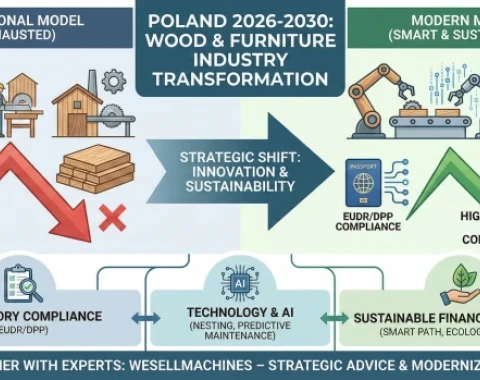
The End of the "Cheap Furniture" Era? Your Survival and Growth Strategy for 2026–2030
For decades, the Polish wood and furniture industry has been the undisputed leader in exports, generating an impressive €16.3 billion in 2024. We were the "furniture factory for Europe," winning on price, raw material availability, and skilled labor. However, as a practitioner who visits your plants daily, I see it clearly: this model is running out of steam. Read more
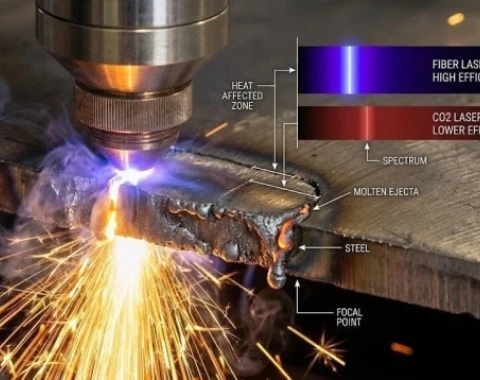
Executive Summary: The State of Play for 2025
The metalworking sector is entering a phase defined in macroeconomic analyses as the "Hyper-Efficiency Era." With industrial sentiment indices fluctuating and steel consumption forecasts showing only marginal growth (+2.2%), the margin for investment error has effectively vanished. At wesellmachines.com, we identify a fundamental paradigm shift: a transition from a Growth-at-all-costs strategy to Asset Utilization & Cash Flow Protection. In this report, we analyze why the key to survival in 2025-2026 is not buying "new," but buying "efficient"—often from the secondary market. Read more

How to Choose a Used Wood CNC Machining Center? A Complete Machine Audit Step-by-Step
Buying a used wood CNC machining center is a huge opportunity, but also a massive risk. Pervasive MDF dust destroys key components, and the cost of repairing a spindle or vacuum pump is staggering. This complete guide (5000+ words) is a professional technical audit in a nutshell. We will teach you how to inspect the machine step-by-step—from spindle diagnostics and vacuum table leak tests to assessing mechanics and controls. Avoid a costly mistake and make an informed investment with our expert checklist. Read more

The Complete Guide: How to Buy a Used CNC Press Brake and Not Regret the Investment
Buying a used CNC press brake is a strategic but risky investment. This article is a complete guide that explains, step-by-step, how to conduct a professional technical inspection to minimize risk. The author, an expert with 20 years of experience, describes the key elements to check: from evaluating the frame and hydraulics, through diagnostics of the CNC control, to verifying the completeness of the documentation. The article provides the necessary knowledge to make an informed and safe decision, helping to avoid costly mistakes. Read more
 Log in with Facebook
 Log in with Google