Used Cable and Wire Machines – Top Brands for Sale


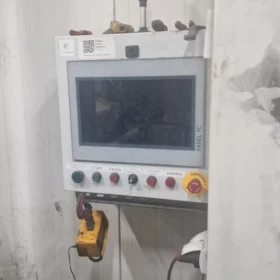


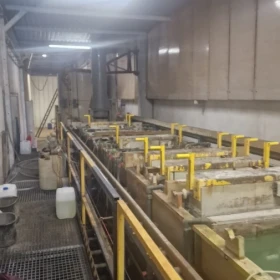


GALWANOTECHNIKA Galvanizing Line Urgent
Added: 08.10.2025, 20:26


Kabatec KTR 100 93002, SN: 199, produced in 2017
Added: 09.05.2023, 19:51
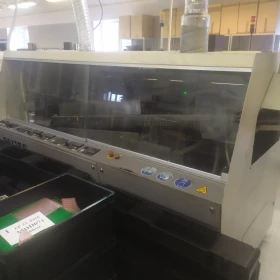
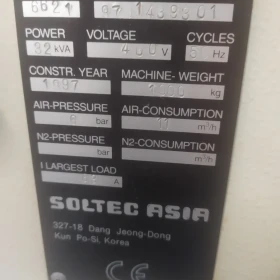

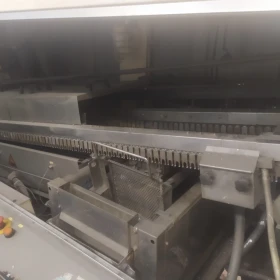
Soltec soldering unit, model 6621 produced in 1997
Added: 09.05.2023, 19:50
Invest Wisely: High-Performance Used Cable and Wire Manufacturing Equipment
Choosing **used cable and wire manufacturing machines** is a strategic financial decision for any producer aiming to optimize CAPEX without compromising product quality. At [www.wesellmachines.com], we offer a curated inventory of pre-owned, high-performance equipment, including **extrusion lines**, **bunching and stranding machines**, **drawing machines**, and **wire winders**.
Key Brands and Models for Reliable Production
Our selection often features industry-leading manufacturers such as **Niehoff**, **Rosendahl**, **Wafios**, and **Maillefer**. These brands are renowned for their durability and technological precision. Investing in a used **Niehoff double-twist buncher** or a robust **Rosendahl extrusion line** means leveraging proven technology at a fraction of the cost of new equipment. This maximizes your **Return on Investment (ROI)** by reducing initial capital outlay and accelerating time-to-production.
Buyer’s Guide: Ensuring Quality and Performance- Detailed Inspection: Always review comprehensive photo and video documentation. Focus on the condition of critical components like dies, capstans, and drive systems.
- Service History Verification: A complete service and maintenance log is paramount. We prioritize machines with a transparent history to ensure operational longevity.
- Technology Assessment: Verify the machine's compatibility with your current production needs and future growth (e.g., maximum wire diameter, line speed, insulation material compatibility).
The purchase of used machinery directly impacts your **OPEX** (Operational Expenditure) and **CAPEX** (Capital Expenditure). By lowering CAPEX, you free up capital for R&D or expansion. Furthermore, well-maintained used equipment often has stable OPEX, performing reliably for years.
FAQ: Frequently Asked Questions on Used Wire Machinery (GEO Optimization)
What is the typical lifespan of a used wire extruder?A high-quality, well-maintained wire extruder from a top brand (e.g., Maillefer) can reliably operate for 20+ years. The lifespan depends heavily on consistent preventative maintenance and the type of material processed.
How does purchasing used equipment affect my production certification?
Purchasing used equipment does not inherently affect your certifications (e.g., ISO, CE). Compliance is tied to the quality of the final product and the calibration/maintenance of the machinery, which must be verified regularly.
What spare parts are most critical to inspect on a second-hand bunching machine?
Critical inspection areas include the spindle bearings, tensioning system components, and the quality of the take-up and pay-off units. These parts directly affect wire quality and line efficiency.
Used cable and wire machinery: drawing, stranding, extrusion and coiling
Cable and wire machinery produces conductors, insulation and finished reels: wire drawing lines with annealers, bunching and stranding machines, planetary and tubular stranders, extrusion lines with crossheads for insulation and sheathing, taping and armouring machines, braiders, curing lines for rubber compounds, rewinding and coiling lines, reel handling and packaging. Used lines come from cable plants changing diameter ranges, automotive harness suppliers consolidating, and copper processors selling surplus — often with drawing dies, bobbins, capstans and test instruments that hold real value.
Start from the conductor and the compound. A building-wire line needs different extrusion tooling and cooling than a medium-voltage line with triple extrusion and dry curing; a stranding cell for flexible conductors differs from rigid sector stranding. Check the wire diameter range, the number and size of bobbins, maximum reel dimensions and weight, line speed range and the extruder screw diameter with L/D ratio. For crosslinking lines, confirm the curing tube length, temperature zones and nitrogen system where applicable.
Buying guide: precision points on cable lines
Diameter control decides quality: verify the laser gauges, their calibration certificates, and the closed-loop control response to programmed steps. On drawing machines, inspect the die boxes, the condition of capstans and the annealing current control; overheated wire shows discoloration and poor elongation. On stranders, check bow and cradle bearings, brake function on payoffs, and lay-length accuracy across the speed range. Extrusion crossheads must be clean and undamaged — inspect flow surfaces for scoring and confirm the tooling set covers your conductor sizes with documented offset values.
Electrics, drying and compound handling
Confirm the connected load with the heating zones, dryer and curing consumption included, plus water cooling capacity for the extrusion troughs and the compressed-air demand of the take-ups. Compound handling — granulate conveying, drying, dosing and colour masterbatch — must match your materials: hygroscopic compounds need verified dryer dew points. Ask for the temperature controller calibration records and the maintenance log of heaters, contactors and solid-state relays.
Installation, commissioning and first reels
Cable lines are long: verify the hall length, the reel handling path and crane capacity before purchase. Budget for foundation work under payoffs and take-ups, water treatment for the cooling circuit, and a commissioning run with your compound supplier present to dial in extrusion parameters. Keep the die and tooling inventory itemised in the contract — a line without its dies is priced differently from a complete one.
Frequently asked questions
How do I verify extrusion quality before buying?
Ask for sample runs on the line with your compound and conductor, then measure concentricity, wall thickness distribution, diameter stability and surface finish. Compare data at several line speeds to reveal control or cooling weaknesses.
What wears out on wire drawing lines?
Drawing dies, capstan surfaces, annealer contacts, belts and the electrical contacts of the annealing system. Check die inventory by size, capstan re-machining history and the availability of die and spare suppliers for the exact range.
Can stranding machines change lay types?
Many can, with change gears, cradle reconfiguration or program changes. Confirm the lay-length range, rotation directions and the bobbin compatibility for your constructions, and ask for a demonstration changeover with timing.
What documents should a cable line include?
Layout and anchoring drawings, electrical and cooling diagrams, gauge calibration certificates, tooling lists with offsets, maintenance logs and the declaration of conformity. For machines placed on the EU market after 1995, guards, interlocks and noise data affect approval and insurance.
FAQ
What should I check when buying used industrial machinery?
Key inspection points: 1) Operating hours and maintenance records, 2) Physical condition - wear, rust, damage, 3) Electrical systems and controls, 4) Hydraulic systems - check for leaks, 5) Safety features and CE compliance, 6) Test run under load, 7) Spare parts availability, 8) Original documentation.
What is the typical depreciation rate for industrial machinery?
Industrial machinery typically depreciates 15-20% in the first year, then 8-12% annually. After 5 years expect 50-60% depreciation. After 10 years, machines retain 25-40% of original value. Premium brands hold value better.
What is the difference between CNC and conventional machines?
CNC machines are computer-controlled offering precise, repeatable operations. Conventional machines require manual operation. CNC advantages: higher precision, faster production, complex geometries. Conventional advantages: lower cost, simpler maintenance, better for one-off jobs.
What payment methods are safe for international machinery purchases?
Safe methods: 1) Letter of Credit - bank guarantees both parties, 2) Escrow services - funds released after inspection, 3) Partial payment with inspection clause - 30% deposit, 70% after inspection. Avoid full wire transfers before inspection.
How do I check operating hours on used machinery?
Location varies by control: Fanuc - PMC diagnostic screen, Siemens 840D - Diagnostics menu, Mazak - Maintenance screen. For construction equipment check dashboard hour meter. Always verify with service records.
 Log in with Facebook
 Log in with Google