Used CNC Machining Centers for Wood and Panel Processing


CNC MAKA 3-Axis Throughfeed Machining Center
Added: 09.06.2026, 19:52


MAKA TBZ-CNC-557 (1993) – Automated Door CNC Machining Center | NUM 750 | 8-Position ATC
Added: 04.03.2026, 13:09


5-Axis CNC Router 2021 ATC Urgent
Added: 27.10.2025, 12:11


SERON CNC Milling Machine (model 1530 Standard)
Added: 20.05.2025, 15:29


Used 5-Axis CNC Machining Center FANUM LAMBDA GT
Added: 13.05.2025, 14:25


CNC Machining Center Vitap Point K2 - 2018 - Opportunity!
Added: 31.03.2025, 16:05
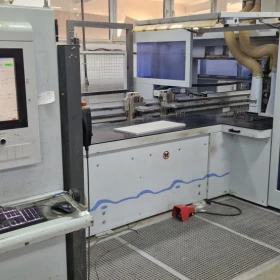


CNC Drilling Machine Weeke Optimat BHX 500 Urgent
Added: 04.03.2025, 10:07
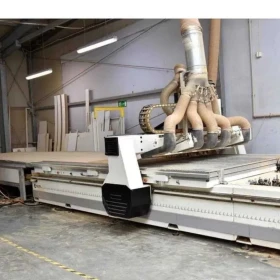


SCM ACCORD 20 CNC Machining Center Urgent
Added: 03.03.2025, 15:44


BIESSE ROVER B FT 2231 G CNC Machining Center with unloading system (2014)
Added: 03.03.2025, 14:47
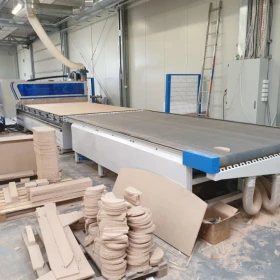


Nesting Machine KN-3713 with automatic loading and unloading
Added: 19.02.2025, 11:42


FELDER FORMAT 4 PROFIT H200 13.33 Urgent
Added: 09.12.2024, 14:07


The VT 1020 ZRBR laser system Wichary Technologies year of production 2012
Added: 09.05.2023, 19:51


Seron milling plotter 2131 Standard with a working area of 2100 x 3100 mm; Year of production: 2018
Added: 11.04.2023, 16:30


CNC Center SCM Tech Z25
Added: 30.01.2023, 16:26


CNC Center FELDER FORMAT 4 PROFIT H20
Added: 30.01.2023, 16:19
Used CNC Machining Centers for Wood and Panel Processing
This category collects the CNC equipment that cuts, bores and routs wood and board material: flat-table machining centers and milling plotters, nesting centers with sheet loading and unloading, CNC drilling machines and throughfeed centers. Buyers come from furniture production, joinery, door and kitchen manufacturers — shops that need programmed repeatability rather than one-off shaping. Machines are listed by their sellers with their own condition descriptions; the offers on this page are the current inventory.
Machine Types and Their Jobs on the Shop Floor
- Nesting centers. A solid-table machining center that cuts and bores parts arranged on a full sheet, so many different parts come off one panel with minimal scrap — the standard setup for carcass furniture and batch production. Solutions range from operator-loaded stand-alone machines to cells with automatic sheet loading and part unloading, trading labour against throughput.
- Flat-table CNC routers and machining centers. The flexible workhorses: panels and solid parts clamped on a vacuum table, machined by a programmed spindle. Three-axis machines cover flat and prismatic work; four- and five-axis configurations handle angled holes, shaped edges and complex geometry in one clamping.
- CNC drilling machines. Dedicated vertical and horizontal boring for panel parts — fast where drilling and grooving dominate and routing is secondary; the platform groups standalone units under drilling machining centers.
- Throughfeed and dedicated centers. Continuous-feed machining for linear workpieces, plus machines built around one product family — door production is the common example, with related equipment in door manufacturing machinery. Occasional specialty units — laser processing systems among them — appear alongside the routers.
Specs That Decide the Purchase
Start from your parts — material, largest panel, batch mix, what must happen in one clamping — then read the machine against these points:
- Working area and table format versus your biggest sheet, plus vacuum table zones and pump capacity for your part sizes.
- Axis count and head configuration — a five-axis head earns its keep on shaped parts, not on flat nesting work.
- Spindle: power and speed range against your materials, tool clamping system (HSK/ISO), and automatic tool changer capacity versus your tool list.
- Control and software: which CAD/CAM system drives the machine (platform-wide tooling sits under software), whether your files can be posted to it, and what happens to software licences when the machine changes hands.
- Positioning and repeatability across the whole table, measured on the machine itself.
- Automation around the machine: loading, unloading and outfeed handling included in the sale, or to be bought separately.
- Wear parts and support: spindle rebuild options, vacuum pumps, rack-and-pinion or ball screw condition, and spare availability for that control generation.
Before You Buy: Checklist for a Used CNC Center
- Run a program of your own across the table and measure bore positions and contour accuracy at several points.
- Test every vacuum zone separately; check pump noise, vacuum level and the state of the table surface and seals.
- Run the spindle at working speed — bearing noise and run-out are the two most expensive surprises on a used router.
- Cycle the tool changer and, where fitted, the drilling block and loading/unloading system end to end.
- Ask for maintenance history, operating hours if recorded, and any spindle or axis repairs.
- Confirm the electrical supply, compressed air and extraction the machine expects against what your hall provides.
- Plan transport and installation: gantry machines need headroom and a level foundation, and the table format sets the trailer envelope.
A step-by-step audit method for this machine class is written up in our news section: how to choose a used wood CNC machining center. For how condition feeds into value, see the machine appraisal methodology. Two manufacturers with several machines in this category at the time of writing have dedicated pages: SCM and Biesse.
FAQ
Three-axis or five-axis — which one fits my parts?
Three-axis machines handle flat panels and prismatic parts well and are simpler to program and maintain. A five-axis head pays off when parts need angled holes, undercuts or shaped surfaces finished in one clamping.
What does a nesting center add compared with a standard CNC router?
Nesting arranges many different parts on one sheet and cuts them in a single program, which raises material yield and suits batch-of-one production. It suits panel work with many part sizes; for larger individual parts and solid wood, a flat-table router with vacuum clamping is often the better fit.
Can I run my existing CAM software on a used machine?
That depends on the control generation and the post-processor available for it. Before buying, confirm your CAM system can output programs for that control, and ask how programs currently reach the machine — network, USB or a dedicated workstation.
 Log in with Facebook
 Log in with Google