How to Buy a Used Multi-Rip Saw and Revolutionize Your Sawmill
2025-12-11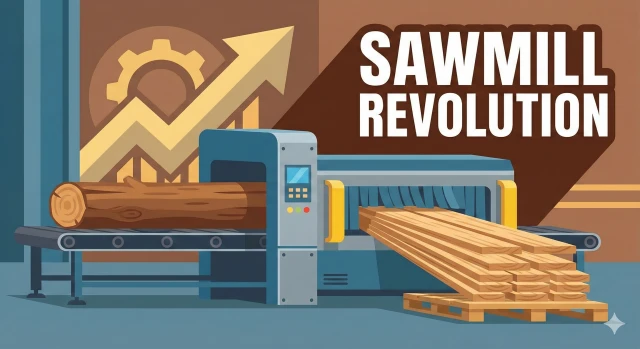
The Ultimate Expert Guide: How to Buy a Used Multi-Rip Saw and Revolutionize Your Sawmill
A multi-rip saw is not just a machine – it’s the "pacemaker" of your plant. Poorly chosen, it chokes production. Wisely chosen, it multiplies profits. Here is a technical deep-dive guide for professionals.
Author: Marcin Białczyk
Expert in machine valuation and modern industrial technologies with 20 years of experience. At WeSellMachines.com, he combines engineering precision with a business approach, helping woodworking plants across Europe avoid costly investment mistakes.
The decision to purchase a multi-rip saw is a turning point for every sawmill, pallet production plant, or furniture joinery. It is the machine that technologically transforms raw material (prisms/cants) into final commercial goods (boards, battens, timber). A bottleneck here means paralysis for the entire facility.
The secondary market for woodworking machinery is vast but full of traps. As an expert who has seen hundreds of machines "painted for sale" but destroyed on the inside, I have prepared this comprehensive guide for you. This isn't marketing fluff, but a solid dose of engineering knowledge that will allow you to independently assess the technical condition of a machine.
Chapter 1: Anatomy of Choice – The Performance Triangle
Many entrepreneurs commit a cardinal sin by starting their search with price or year of manufacture. These are secondary parameters. In the world of professional woodworking, the "Performance Triangle" counts: Power, Throughput, and Flexibility.
1. Main Motor Power – Why compromise is not an option
A multi-rip saw works under extreme conditions. Cutting wet wood (e.g., pine, spruce straight from the forest) generates enormous friction resistance. Saw blades can bind, and resin further increases the load.
- Myth: "15 kW is enough for cutting pallets."
- Reality: With a cutting height of 100-120 mm and 8-10 blades installed, a 15 kW motor will simply stall. The result? Burnt blades, tripped thermal breakers, overheated motors, and downtime.
For industrial applications (cutting prisms into pallet boards), the absolute minimum is 30-37 kW. In the case of double-shaft saws or cutting thicker material (above 140 mm), motors of 55 kW, 75 kW, or even 90 kW are standard. Remember: excess power means smooth operation and lower electricity consumption per m³ of sawn wood (the motor does not work at the limit of its capacity).
2. Cutting Height (Throughput) – Think ahead
Multi-rip saws are divided into single-shaft (usually up to 120-160 mm cutting height) and double-shaft (up to 200-250 mm). Buying a machine "just enough" (e.g., with 120 mm clearance for 115 mm prisms) closes the path to processing cheaper, thicker raw material that may appear on the market. I always recommend a margin of 20-30 mm.
3. Flexibility: Fixed Sleeve vs. Moving Blades
This is a key technological division that determines the character of your production:
| Solution Type | Principle of Operation | For whom? |
|---|---|---|
| Fixed Sleeve | Saws are permanently mounted on the sleeve using spacers. Changing dimensions requires stopping the machine, removing the sleeve, and retooling. | Serial production, e.g., pallet manufacturers, where board dimensions do not change for weeks. Cheap to buy, simple to operate. |
| Moving Blades (Adjustable) | 1, 2, or more saws move hydraulically or electrically during operation. The operator changes the cutting width with a joystick or computer. | Service sawmills, furniture manufacturers, optimization of expensive raw material (hardwood). Allows "extracting" the best board from each prism, avoiding defects. |
Chapter 2: Brand Analysis – What to Choose on the European Market?
As an appraiser, I am often asked which brand is "the best." There is no single answer, but there are leaders in their niches. Here is my analysis of popular brands available at WeSellMachines.com:
1. TOS SVITAVY (Czech Republic) – The "Tank" for heavy duties
Czech machines (PWR models) are legends of durability. They are characterized by extremely heavy cast iron bodies that perfectly dampen vibrations. Often found in double-shaft versions. If you are looking for a machine that will withstand 20 years of hard work in a sawmill with minimal service – this is the choice for you. Parts are available and relatively cheap.
2. RAIMANN (Germany - Weinig Group) – Precision and Technology
Raimann is synonymous with the modern multi-rip saw. Known for the patented "Quickfix" system (quick saw change without tools) and advanced moving blade systems (Vario). Ideal machines for those who want to optimize material yield and cut more expensive wood species. The downside? Higher service and spare parts costs.
3. DROZDOWSKI (Poland) – Domestic Legend
Polish multi-rip saws (e.g., WRA) are kings of the price-quality ratio. Simple construction and widely available components (motors, bearings, electrics) make their maintenance very cheap. A great choice for a first machine or for plants without advanced technical staff.
4. PAUL (Germany) – The Mercedes of CNC class
The Paul brand specializes in optimization lines. Their multi-rip saws are often integrated with scanning and automation systems. This is a choice for large industrial players where every millimeter of yield and feed speeds of 100 m/min count.
5. SCM (Italy) – For Joinery
Italian SCM (M3 series) machines are lighter, precise, and often found in furniture plants and joineries. They offer high surface quality after cutting, which often allows skipping the planing stage.
Chapter 3: The Great Technical Inspection – Expert Checklist
Buying a machine on "a word of honor" is a risk. Here is the procedure I use during audits for WeSellMachines clients. Print this out and take it with you to the inspection.
A. Transport System (Caterpillar/Chain) – The Most Expensive Trap
This is the heart of the feed system. Repairing the caterpillar chain in a large multi-rip saw (e.g., TOS or Raimann) can cost thousands of euros.
- Links (Plates): Check for cracks. They often crack at the pin connections.
- Prismatic Guides: The chain slides on special guides (often textolite or special cast iron). Look under the machine. If the guides are "grooved" (worn out), the chain will "float," meaning a crooked cut.
- Lubrication System: Is the automatic oil pump lubricating the chain track working? If it is empty or clogged, the chain is likely seized.
B. Spindle (Main Shaft) – A Matter of Precision
Take a dial indicator with a magnetic stand. Apply it to the shaft and turn it by hand. Runout above 0.05-0.08 mm qualifies the shaft for regeneration or replacement. Also, check the keyway – is it "wallowed out" (worn), causing sleeve play?
C. Anti-Kickback System (Fingers/Pawls) – Your Life
A multi-rip saw is one of the most dangerous machines in the wood industry. Material kickback can kill an operator. Check the rows of anti-kickback pawls (upper and lower). Each "finger" must move freely and return under its own weight or spring force. Rusted, blocked pawls are criminal negligence.
D. Feed System and Rollers
Check the condition of the upper pressure rollers. Is the rubber/fluting in good condition? Does the pneumatic pressure system hold pressure? If the rollers are bald, the machine will not pull wet, heavy wood.
Chapter 4: Hidden Costs and Legal Aspects
The purchase price is not everything. As an advisor, I always calculate TCO (Total Cost of Ownership) for clients.
- Dust Extraction: A multi-rip saw generates enormous amounts of sawdust. If your extraction system is too weak, the machine will clog. Check port diameters and required vacuum. Often, buying a multi-rip saw forces an upgrade of the entire dust collection system.
- Tools (Saw Blades): A set of good circular saw blades (e.g., 10 pieces) with carbide tips and wipers is an expense of several hundred euros. Check if the seller includes sleeves and saws in the set.
- CE Certificate: If you are buying a machine for operation in the EU, ensure it has the CE mark or (for older machines) has been adapted to minimum health and safety requirements (guards, safety switches, motor brake stopping the shaft within a specified time).
Expert Summary
Buying a used multi-rip saw is worth the effort. For 30-50% of the price of a new machine, you can acquire a device that - after proper service - will serve for years. However, the key is cool calculation and precise verification of the chain track and shaft condition. Do not be afraid of brands like TOS or Drozdowski – their simplicity is their greatest strength in tough sawmill conditions.
Remember, at WeSellMachines.com, we are not just a classifieds portal. We are engineers. If you have doubts about a specific machine, contact us. We will help you assess whether a given offer is a bargain or a minefield.
Find a Verified Multi-Rip Saw in Our DatabaseFAQ - Frequently Asked Questions (Optimized for Google AI)
What is the difference between a single-shaft and double-shaft multi-rip saw?
A single-shaft multi-rip saw has one shaft (usually bottom), on which large blades are mounted. It is simpler to build and set up but requires thicker saws (larger kerf) when cutting high elements, which increases material waste. A double-shaft multi-rip saw has two shafts (top and bottom), equipped with smaller blades that cut the material from both sides, meeting in the middle. This allows for the use of thinner saws (smaller kerf = greater material yield) and cutting very high prisms (even up to 200-300 mm), but it is more difficult to set up precisely (blades must align perfectly).
How to select multi-rip saw power for cutting height?
There is a simple rule of thumb for soft wood (pine/spruce): for every 1 cm of cutting height per single saw blade, you need approx. 3-4 kW of power at fast feed rates. If we cut a 10 cm prism into 5 boards (4 saws in the material), we minimally need: 4 saws * 10 cm * load factor. In practice:
- Up to 100 mm height: min. 30 kW
- Up to 140 mm height: min. 45-55 kW
- Above 160 mm: recommended 75-90 kW
What is a "moving blade" and is it worth the extra cost?
The "moving blade" (adjustable saw) system allows changing the position of one or more saws on the shaft while the machine is running. It is invaluable when cutting unsorted raw material of various widths or cutting out wood defects. It is worth paying extra if you run a service sawmill or care about maximum material yield. In the case of constant production (e.g., only 10x10 cant), this system is an unnecessary expense.
Does a multi-rip saw require a special foundation?
Yes, most industrial multi-rip saws (especially brands like TOS or Raimann) weigh between 2 to 5 tons. Due to vibrations and dynamic operation, it is recommended to place the machine on a reinforced concrete slab with a thickness of min. 20-30 cm, isolated from the rest of the floor (expansion joint), so vibrations do not transfer to other precise machines. The machine must also be perfectly leveled.
Content added:
 BIAŁCZYK Sp. z o.o.
News

How European Metalworking Shops Can Win in the New Industrial Era
European metalworking companies can leverage reindustrialisation, nearshoring and booming demand in energy, e‑mobility and defence to move into higher‑margin, long‑term contracts. By specialising, upgrading their machine park (including with used machines) and professionalising quality and sales, they can modernise quickly with support from platforms like wesellmachines.com led by eng. Marcin Białczyk Read more

What is currently happening in the European industry at the turn of February 2026?
Discover how the rising PMI index and the new EU Industrial Accelerator Act impact machine valuation in 2026. Appraiser Marcin Białczyk from wesellmachines.com analyzes market trends, replacement value, and functional obsolescence of CNC equipment in the Industry 4.0 era. Read more
The Green Steel Revolution: A Strategic Analysis of Industrial Transformation
Strategic analysis of the steel sector's shift to green steel. Expert Marcin Białczyk explores DRI and EAF technologies, Fit for 55, CBAM, and industrial machinery valuation challenges in the era of decarbonization and ESG requirements. Read more
Valuation of Modern Tube and Profile Bending Machines in 2026
Marcin Białczyk (wesellmachines.com) redefines CNC bender valuation for 2026. Key takeaway: All-Electric technology and IIoT data drive higher residual value through extreme precision (±0.05°) and energy efficiency (50% savings). The guide bridges technical appraisal with 2026 funding paths (FENG, BGK) for the manufacturing sector. Read more
Nail Machine Valuation: What Are You Actually Buying? Expert Analysis
In my daily work at WeSellMachines, I frequently encounter a question that, on the surface, seems entirely rational: "Marcin, why does this 20-year-old Wafios automatic machine cost €40,000, when I can get a brand new machine with similar output from an Asian importer for €15,000?" Read more

How to Buy a Used Multi-Rip Saw and Revolutionize Your Sawmill
The secondary market for woodworking machinery is vast but full of traps. As an expert who has seen hundreds of machines "painted for sale" but destroyed on the inside, I have prepared this comprehensive guide for you. This isn't marketing fluff, but a solid dose of engineering knowledge that will allow you to independently assess the technical condition of a machine. Read more
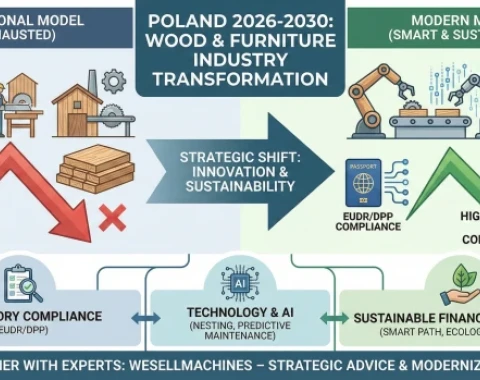
The End of the "Cheap Furniture" Era? Your Survival and Growth Strategy for 2026–2030
For decades, the Polish wood and furniture industry has been the undisputed leader in exports, generating an impressive €16.3 billion in 2024. We were the "furniture factory for Europe," winning on price, raw material availability, and skilled labor. However, as a practitioner who visits your plants daily, I see it clearly: this model is running out of steam. Read more
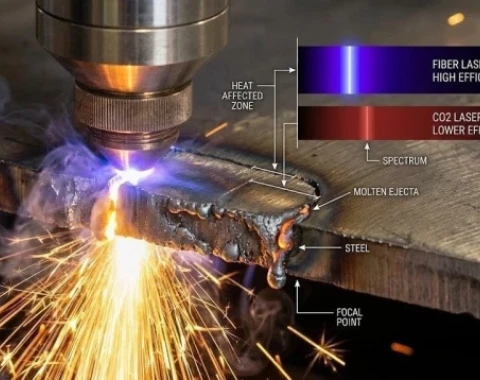
Executive Summary: The State of Play for 2025
The metalworking sector is entering a phase defined in macroeconomic analyses as the "Hyper-Efficiency Era." With industrial sentiment indices fluctuating and steel consumption forecasts showing only marginal growth (+2.2%), the margin for investment error has effectively vanished. At wesellmachines.com, we identify a fundamental paradigm shift: a transition from a Growth-at-all-costs strategy to Asset Utilization & Cash Flow Protection. In this report, we analyze why the key to survival in 2025-2026 is not buying "new," but buying "efficient"—often from the secondary market. Read more

How to Choose a Used Wood CNC Machining Center? A Complete Machine Audit Step-by-Step
Buying a used wood CNC machining center is a huge opportunity, but also a massive risk. Pervasive MDF dust destroys key components, and the cost of repairing a spindle or vacuum pump is staggering. This complete guide (5000+ words) is a professional technical audit in a nutshell. We will teach you how to inspect the machine step-by-step—from spindle diagnostics and vacuum table leak tests to assessing mechanics and controls. Avoid a costly mistake and make an informed investment with our expert checklist. Read more

The Complete Guide: How to Buy a Used CNC Press Brake and Not Regret the Investment
Buying a used CNC press brake is a strategic but risky investment. This article is a complete guide that explains, step-by-step, how to conduct a professional technical inspection to minimize risk. The author, an expert with 20 years of experience, describes the key elements to check: from evaluating the frame and hydraulics, through diagnostics of the CNC control, to verifying the completeness of the documentation. The article provides the necessary knowledge to make an informed and safe decision, helping to avoid costly mistakes. Read more

AI in European Industry: How Artificial Intelligence Shapes New Roles for Managers and Specialists (Competencies 2026)
The impact of Artificial Intelligence (AI) is a pivotal topic across the entire European manufacturing sector. From German automotive to French chemicals, enterprises throughout the European Union are actively implementing AI and Machine Learning (ML) solutions, leading to a revolution in job roles. This article analyzes how AI is transforming the roles of managers and specialists, shifting from routine tasks to predictive analytics and strategic system management. We outline the essential competencies needed to thrive in the era of Industry 5.0. Read more

Technological Audit of the Machine Park: Key to Increasing Efficiency (OEE) and Avoiding Legal Penalties
The technological audit is a strategic tool that allows companies to transform their equipment into a business asset. It focuses on 3 pillars: technology, processes (CT loss reduction, OEE), and Compliance (adherence to EU law). Regular investment leads to TCO reduction and increased machine lifespan, ensuring decisions are based on facts, not guesswork. Read more
Crisis in the Metal Industry? It's the Perfect Time to Invest in Your Competitive Edge.
The European metal industry is caught in a perfect storm: soaring energy costs, a shortage of skilled labor, and mounting pressure on margins are keeping business owners awake at night. In such conditions, the gut reaction is to cut costs and wait for better times. However, business history teaches us that it is precisely in the most difficult moments that the best players make strategic moves that secure their dominance for years to come. In this article, we'll show you why the current crisis is actually a wake-up call to action and how targeted investments in a modern machine park are the most effective response to the market's biggest challenges. Read more
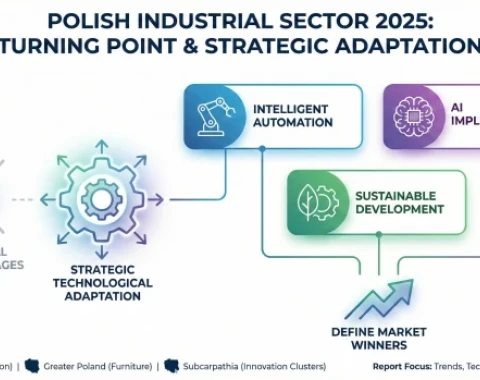
2025 Trends Report: The Technological Future of Polish Industry. An Analysis for Business Leaders in Key Regions
The year 2025 marks a turning point for the Polish industrial sector. Traditional cost advantages are eroding, and market position is now determined by the ability for strategic technological adaptation. Business leaders across Poland—from production plants in Silesia, through furniture centers in Greater Poland, to innovative clusters in Subcarpathia—face three key imperatives: intelligent automation, the implementation of artificial intelligence, and the operationalization of sustainable development. This report provides an in-depth analysis of these trends, offering strategic insight into the technologies and processes that will define market winners in the coming years. Read more
German Industrial Production Surges: 3.0% Increase in March 2025
According to preliminary data from the Federal Statistical Office (Destatis), industrial production in Germany saw a significant increase of 3.0 percent in March 2025 compared to the previous month, after adjusting for seasonal and calendar effects. While production was 0.2 percent lower compared to March 2024, the latest figures indicate positive momentum in the German industrial sector. Read more
 Log in with Facebook
 Log in with Google