How European Metalworking Shops Can Win in the New Industrial Era
2026-03-04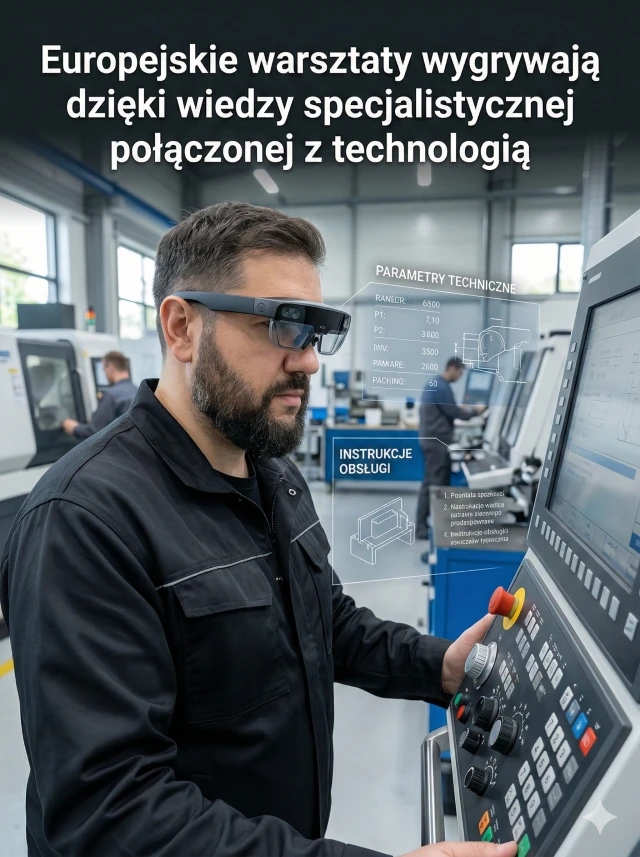
How European Metalworking Shops Can Win in the New Industrial Era
European metalworking companies can benefit from today’s industrial shift by focusing on high‑growth sectors (energy, e‑mobility, defence), upgrading their machine park (including used machines), raising quality and certifications, and positioning themselves as reliable nearshoring partners for OEMs in Europe.
Author: inż. Marcin Białczyk – Machine Appraiser, CEO and Chief Technologist at wesellmachines.com
Introduction: A New Industrial Reality for European Metalworking
Over the past few years, European manufacturing has entered a new phase shaped by reindustrialisation, nearshoring and massive investments in energy, e‑mobility and defence. For metalworking companies in Central and Eastern Europe – especially in Poland – this is not just background noise, but a real chance to move up the value chain and secure more profitable work.
As an engineer and machine appraiser working daily with factories that buy and sell equipment, I see the same pattern again and again: those who actively adapt their machine park, processes and sales strategy to this new reality grow, while those who wait are pushed into low‑margin, highly competitive segments. (inż. Marcin Białczyk, Machine Expert, CEO and Chief Technologist at wesellmachines.com).
Current Industrial Trends Reshaping Metalworking in Europe
Reindustrialisation and “Producing in Europe for Europe”
European industrial policy has shifted decisively towards resilience and self‑reliance, with governments and large corporations investing in new production capacity inside Europe. Recent industry studies show that the share of companies investing in reshoring or nearshoring has grown strongly between 2024 and 2025, and this momentum continues into 2026.
The idea is simple: instead of relying on long, fragile supply chains spanning half the globe, manufacturers want key components produced close to their main markets. This opens the door for metalworking shops in countries like Poland, Czech Republic, Slovakia and Romania to become strategic suppliers to Western European OEMs.
Supply Chain Risk and the Push for Nearshoring
Geopolitical tensions, disruptions around key maritime routes and the lingering effects of the pandemic have made transport costs and lead times far less predictable. In response, many manufacturers are redesigning their supply chains to include more regional or local partners.
For metal fabrication and machining, this means that European buyers increasingly prefer suppliers who can offer reliable lead times, flexible batch sizes and stable quality within a few days’ truck drive instead of waiting weeks for overseas shipments.
Investment Booms: Energy, E‑mobility and Defence
Three sectors stand out as major growth engines that are heavily metal‑intensive: renewable energy and grid infrastructure, e‑mobility and modern automotive, and defence and security. All of these require large volumes of fabricated and machined components, from heavy welded structures to precision milled and turned parts.
For European metalworking companies, this is a once‑in‑a‑generation chance to build long‑term business in higher value segments.
Key Opportunities for Polish and European Metalworking Companies
Metalworking in Poland and neighbouring countries has a strong base: thousands of small and mid‑sized shops specialising in cutting, forming, welding and machining, already supplying clients in construction, machinery, automotive and appliances. The new industrial wave creates additional, often more profitable, opportunities.
Components for Renewables and Energy Infrastructure
The energy transition requires enormous quantities of steel and aluminium structures, as well as complex machined components. Typical opportunities include towers, frames and support structures for wind turbines and solar farms, mounting systems for electrical equipment and machined parts for gearboxes and bearings.
Shops with strong welding and heavy fabrication capabilities, combined with decent machining capacity and robust quality control, are well positioned to become recurring suppliers to energy sector projects across Europe.
Parts for E‑mobility and Modern Automotive
E‑mobility creates demand for new component types, often produced from aluminium and high‑strength steels, such as battery housings, lightweight structural parts and precision components for cooling and drive systems. Metalworking shops able to handle complex aluminium machining, thin‑wall parts and tight tolerances can access attractive niche work in this sector.
Defence and Security Industry
Growing defence budgets across Europe mean more orders for vehicles, armoured structures and support systems that all rely on metal components. In return for meeting strict quality, documentation and traceability requirements, metalworking companies can secure multi‑year contracts with relatively stable demand.
Machinery, Automation and Intralogistics
The ongoing automation of factories and warehouses brings demand for frames, machine parts, guards and precision components used in conveyors, robots and intralogistics systems. This segment is closely connected to the business of buying and selling industrial machinery, where marketplaces such as wesellmachines.com operate.
Step‑by‑Step: How a Metalworking Shop Can Benefit from These Trends
To move from potential to real orders, metalworking companies need a clear, practical roadmap that aligns strategy, investments and operations with market demand.
1. Define Focus Sectors and Specialisation
Instead of trying to serve every segment with limited resources, management should select two or three priority sectors, map existing competences to those markets and decide on a clear specialisation, such as heavy welded structures, precision CNC machining or aluminium components.
2. Audit and Modernise the Machine Park
A structured audit of the machine park should look at age, condition, capability gaps and bottlenecks to identify where upgrades will bring the biggest impact on quality and productivity. This often leads to investments in multi‑axis machining, fiber laser cutting or automated bending, which can be achieved with both new and high‑quality used machines.
3. Introduce Automation and Industry 4.0 Basics
Robotised machine tending, welding cells, basic OEE monitoring and simple MES systems help improve utilisation, reduce downtime and give better control over delivery times and costs. Even modest digital tools can significantly strengthen a shop’s position when negotiating with demanding customers.
4. Upgrade Quality Systems, Certifications and Traceability
Investments in metrology, ISO‑based quality systems and full material traceability are essential for entering automotive, e‑mobility and defence supply chains. These capabilities differentiate a company from low‑cost competitors and open doors to more stable, higher‑margin projects.
5. Build International Sales and Marketing
A professional website in English, presence at key trade fairs and smart use of B2B platforms can make a technically strong but little‑known shop visible to OEMs and integrators across Europe. Clear communication of capabilities and case studies helps potential clients quickly understand where the company adds value.
6. Manage Energy and Material Efficiency
Optimising energy use, improving nesting and material planning, and reducing scrap helps protect margins in a volatile cost environment and supports sustainability expectations from larger customers.
7. Invest in People and Skills
Modern equipment and software require operators, programmers and technologists who can unlock their full potential, which is why training and leadership development should accompany every technical investment.
Why Upgrading Your Machine Park Is Critical Now
Capability is one of the clearest differentiators in a crowded supplier landscape: shops with modern CNC, cutting and bending equipment can accept more complex, higher‑margin work and meet strict deadlines, while those relying on outdated machines are often trapped in low‑price segments.
The current investment wave in Europe will not last forever, so companies that modernise their machine park now are better positioned to secure long‑term framework agreements and build relationships that survive future market cycles.
From my perspective as an appraiser and advisor, focused upgrades of a few critical machines often unlock entirely new business possibilities and pay back quickly through improved utilisation and access to more demanding projects. (inż. Marcin Białczyk, wesellmachines.com).
How wesellmachines.com Helps Metalworking Companies Modernise Faster
In this context, the used machinery market plays a strategic role. Platforms like wesellmachines.com provide a transparent, efficient way to buy and sell industrial equipment across Europe.
A Marketplace for Buying the Right Machine
wesellmachines.com aggregates offers for metalworking equipment – from machining centres and lathes to sheet metal lines and automation – allowing companies to quickly find machines that match their technical needs and budget. Access to a broad range of brands and models helps buyers compare options and make informed investment decisions.
A Channel to Monetise Surplus Equipment
Modernisation usually involves both buying and selling; wesellmachines.com enables factories to list surplus machines, reach a wide pool of buyers and turn idle assets into capital for new investments. This two‑way approach makes upgrading the machine park more financially and operationally manageable.
Practical Examples and Scenarios
Example 1: Entering the Renewable Energy Supply Chain
A mid‑sized Polish fabricator upgrades its welding and machining capacity with a used CNC boring mill and modern positioners, strengthens quality documentation and develops reference projects for mounting structures, gradually becoming a regular supplier for renewable energy projects across the EU.
Example 2: Specialising in E‑mobility Prototypes
A smaller CNC shop purchases a high‑precision 5‑axis machining centre and CMM on the used market, builds strong traceability and showcases complex aluminium parts on an English‑language website, securing prototype work from e‑mobility engineering centres and Tier‑1 suppliers.
Example 3: Long‑Term Cooperation with a Defence OEM
A larger metal fabrication company invests in welding procedures, certifications and traceability, upgrades its cutting equipment by selling older machines and buying newer units, and gradually becomes a trusted supplier of structural components for defence vehicles under long‑term contracts.
FAQ: Key Questions from Metalworking Owners
How can my metalworking shop benefit from reindustrialisation and nearshoring?
By positioning your company as a reliable regional supplier with modern capabilities, strong quality systems and a clear specialisation in sectors like energy, e‑mobility or defence, you can win work that previously went to distant, low‑cost regions.
Do I need brand‑new machines to move into higher‑value work?
Not necessarily. High‑quality used machines sourced through trusted marketplaces, combined with smart process improvements and training, can significantly raise your capability at lower capital cost than a fully new line.
Which investments should I prioritise in the next 12–24 months?
Most shops benefit from focusing first on key bottlenecks in cutting and machining, adding targeted automation, improving quality and metrology, and building a stronger international sales presence before making very large greenfield investments.
How does wesellmachines.com support my modernisation plan?
wesellmachines.com helps you find suitable new and used machines, compare options and quickly sell surplus equipment, making it easier to finance and execute a step‑by‑step upgrade of your machine park.
Summary and Next Steps
The combination of reindustrialisation, nearshoring and sector‑specific investment waves in energy, e‑mobility and defence is reshaping the industrial map of Europe, creating real opportunities for metalworking companies that adapt in time.
Over the next 12–24 months, it is worth defining focus sectors, auditing and upgrading the machine park, introducing automation and digital tools, strengthening quality and traceability, and investing in international‑facing sales and marketing.
Platforms like wesellmachines.com can play a key role in this process by making it easier to find the right machines and to monetise equipment that no longer fits your strategy.
AI Transparency Note
AI tools were used to support the research, structuring and drafting of this article, drawing on publicly available industry analyses and practical experience from European metalworking projects. All recommendations are grounded in real‑world industrial best practices and the hands‑on know‑how of experts working with machine parks and manufacturing companies, including inż. Marcin Białczyk – machine appraiser, CEO and Chief Technologist at wesellmachines.com.
Conteúdo adicionado:
 BIAŁCZYK Sp. z o.o.
Notícias
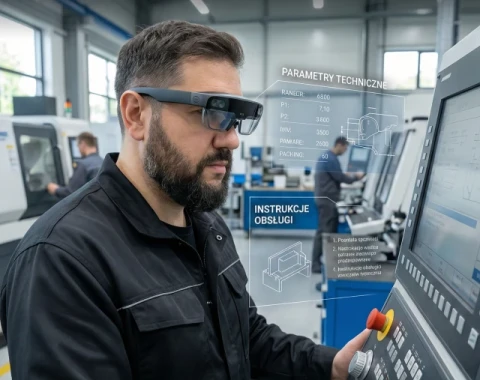
Como as oficinas metalúrgicas europeias podem vencer na nova era industrial.
As empresas metalúrgicas europeias podem aproveitar a reindustrialização, a relocalização da produção e a crescente demanda nos setores de energia, mobilidade elétrica e defesa para conquistar contratos de longo prazo com margens mais elevadas. Ao se especializarem, modernizarem seu parque de máquinas (inclusive com máquinas usadas) e profissionalizarem a qualidade e as vendas, elas podem se modernizar rapidamente com o apoio de plataformas como a wesellmachines.com, liderada pelo engenheiro Marcin Białczyk. Leia mais
O que está acontecendo atualmente na indústria europeia no início de fevereiro de 2026?
Descubra como o aumento do índice PMI e a nova Lei Aceleradora Industrial da UE impactam a avaliação de máquinas em 2026. O avaliador Marcin Białczyk, da wesellmachines.com, analisa as tendências de mercado, o valor de reposição e a obsolescência funcional de equipamentos CNC na era da Indústria 4.0. Leia mais
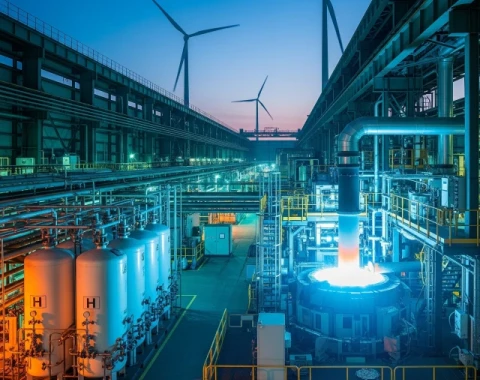
A Revolução do Aço Verde: Uma Análise Estratégica da Transformação Industrial
Análise estratégica da transição do setor siderúrgico para o aço verde. O especialista Marcin Białczyk explora as tecnologias DRI e EAF, o programa Fit for 55, o CBAM e os desafios de avaliação de máquinas industriais na era da descarbonização e das exigências ESG. Leia mais
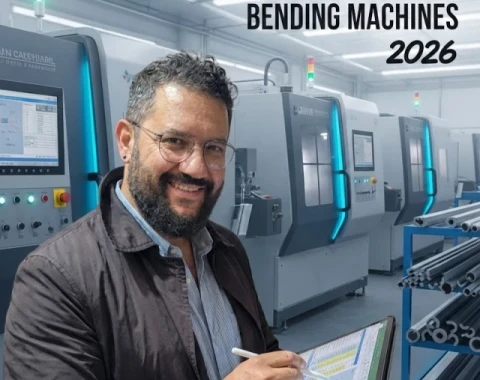
Avaliação de máquinas modernas de curvatura de tubos e perfis em 2026
Marcin Białczyk (wesellmachines.com) redefine a avaliação de dobradeiras CNC para 2026. Principal conclusão: A tecnologia totalmente elétrica e os dados da IIoT impulsionam um maior valor residual por meio de extrema precisão (±0,05°) e eficiência energética (economia de 50%). O guia conecta a avaliação técnica com as opções de financiamento para 2026 (FENG, BGK) para o setor de manufatura. Leia mais
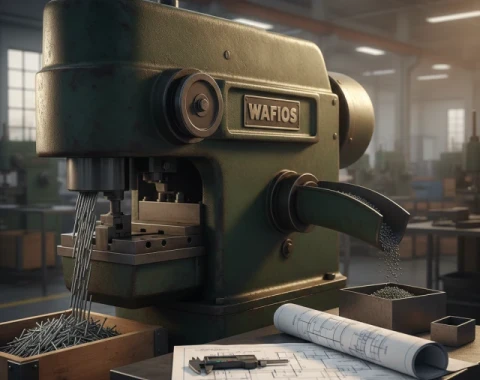
Avaliação de máquinas de pregos: o que você está realmente comprando? Análise de especialistas.
No meu trabalho diário na WeSellMachines, frequentemente me deparo com uma pergunta que, à primeira vista, parece totalmente racional: "Marcin, por que essa máquina automática Wafios de 20 anos custa € 40.000, quando posso comprar uma máquina novinha em folha com produção semelhante de um importador asiático por € 15.000?" Leia mais

Como comprar uma serra de corte múltiplo usada e revolucionar sua serraria.
O mercado secundário de máquinas para trabalhar madeira é vasto, mas cheio de armadilhas. Como especialista que já viu centenas de máquinas "pintadas para venda", mas destruídas por dentro, preparei este guia completo para você. Não se trata de conversa fiada de marketing, mas sim de uma sólida dose de conhecimento técnico que lhe permitirá avaliar de forma independente as condições técnicas de uma máquina. Leia mais
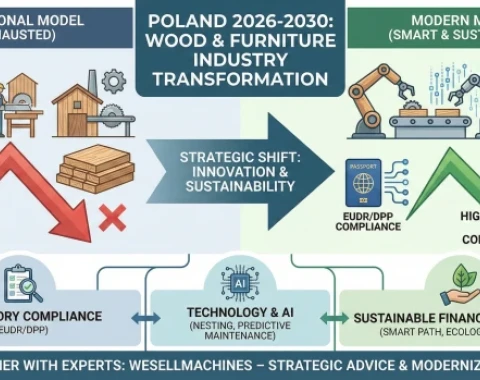
O Fim da Era dos "Móveis Baratos"? Sua Estratégia de Sobrevivência e Crescimento para 2026–2030
Durante décadas, a indústria polonesa de madeira e móveis foi líder incontestável em exportações, gerando impressionantes € 16,3 bilhões em 2024. Éramos a "fábrica de móveis da Europa", vencendo em preço, disponibilidade de matéria-prima e mão de obra qualificada. No entanto, como profissional que visita suas fábricas diariamente, vejo claramente: esse modelo está perdendo força. Leia mais
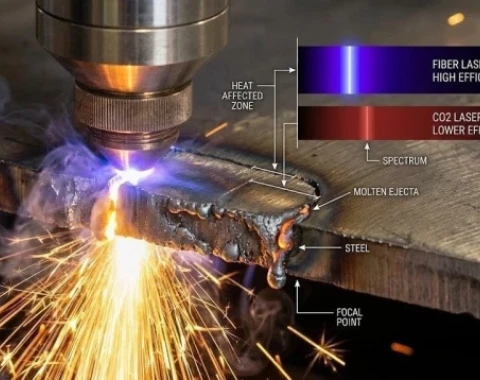
Resumo Executivo: O Panorama Atual para 2025
O setor metalúrgico está entrando em uma fase definida nas análises macroeconômicas como a "Era da Hipereficiência". Com os índices de confiança industrial oscilando e as previsões de consumo de aço mostrando apenas um crescimento marginal (+2,2%), a margem de erro para investimentos praticamente desapareceu. Na wesellmachines.com, identificamos uma mudança de paradigma fundamental: uma transição de uma estratégia de crescimento a qualquer custo para a utilização de ativos e a proteção do fluxo de caixa. Neste relatório, analisamos por que a chave para a sobrevivência em 2025-2026 não é comprar "novo", mas sim comprar "eficiente" — frequentemente no mercado de usados. Leia mais

Como escolher um centro de usinagem CNC para madeira usado? Uma análise completa da máquina, passo a passo.
Comprar um centro de usinagem CNC para madeira usado é uma grande oportunidade, mas também um risco enorme. A poeira de MDF, que se acumula em abundância, destrói componentes essenciais, e o custo de reparo de um fuso ou bomba de vácuo é exorbitante. Este guia completo (mais de 5.000 palavras) é uma auditoria técnica profissional resumida. Ensinaremos você a inspecionar a máquina passo a passo — desde o diagnóstico do fuso e testes de vazamento da mesa de vácuo até a avaliação da mecânica e dos controles. Evite erros dispendiosos e faça um investimento consciente com nossa lista de verificação especializada. Leia mais

Guia completo: como comprar uma prensa dobradeira CNC usada e não se arrepender do investimento.
Comprar uma prensa dobradeira CNC usada é um investimento estratégico, porém arriscado. Este artigo é um guia completo que explica, passo a passo, como realizar uma inspeção técnica profissional para minimizar os riscos. O autor, um especialista com 20 anos de experiência, descreve os principais elementos a serem verificados: desde a avaliação da estrutura e do sistema hidráulico, passando pelo diagnóstico do controle CNC, até a verificação da integridade da documentação. O artigo fornece o conhecimento necessário para tomar uma decisão informada e segura, ajudando a evitar erros dispendiosos. Leia mais
 Faça login com Facebook
 Faça login com Google