The Green Steel Revolution: A Strategic Analysis of Industrial Transformation
2026-02-18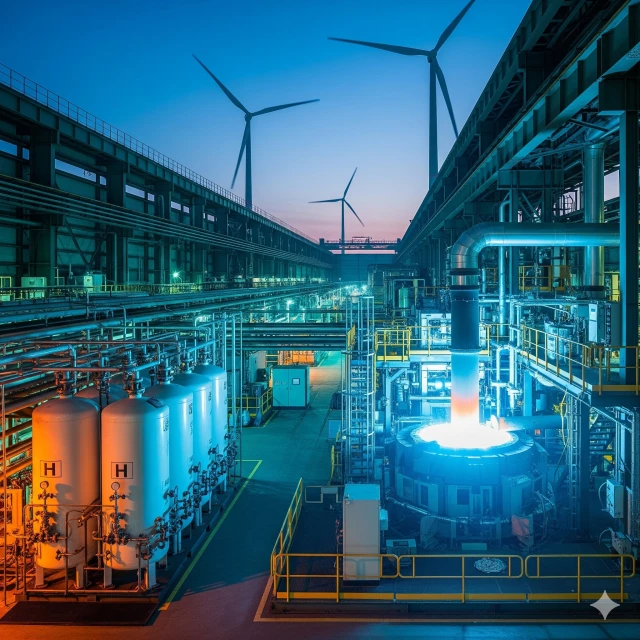
The Green Steel Revolution: A Strategic Analysis of Industrial Transformation
By: Marcin Białczyk – Industrial Machinery Appraiser & Valuation Expert
Introduction: The Steel Backbone of a New Era
Steel has long been the literal and metaphorical backbone of modern civilization. From the skyscrapers defining our skylines to the heavy machinery traded on platforms like wesellmachines.com, steel is omnipresent. However, the metallurgical industry currently stands at its most significant crossroads since the Bessemer process revolutionized production in the 19th century.
As an appraiser specializing in industrial machinery, I monitor not only the physical condition of assets but also their "economic life" in the context of changing regulations. Today, the steel industry is facing a dual pressure: the physical necessity of the material for the green transition and the regulatory requirement to eliminate the carbon footprint of its production. This article explores why green steel is no longer a "niche interest" but a survival strategy for the European industrial landscape.
1. Why Steel? The Carbon Weight of the Industrial World
To understand the scale of the challenge, one must look at the numbers. Metallurgy is one of the most emission-intensive sectors of the global economy. Traditional steel production, primarily based on integrated Blast Furnace-Basic Oxygen Furnace (BF-BOF) routes, relies heavily on coking coal as both an energy source and a reducing agent.
The Emission Reality
Statistics are unforgiving: traditional steel production accounts for approximately 7% to 9% of total global CO2 emissions. For every ton of steel produced via the blast furnace route, roughly 1.8 to 2.2 tons of CO2 are released into the atmosphere. In the context of the European Union’s "Fit for 55" package, which aims for a 55% reduction in net greenhouse gas emissions by 2030, these figures are unsustainable.
The Regulatory Pincer Movement
From a valuation perspective, industrial assets are currently caught in a "pincer movement":
-
ETS Costs: The EU Emissions Trading System (ETS) is phasing out free CO2 permits. As the price per ton of carbon rises, the operational expenditure (OPEX) of traditional coal-based mills skyrockets, rendering older machinery "stranded assets."
-
ESG and Reporting: Environmental, Social, and Governance (ESG) criteria are now central to securing financing. Companies failing to report a shrinking carbon footprint find it increasingly difficult to attract investment or even maintain credit lines.
-
Market Demand: The "green" transition itself requires massive amounts of steel—for wind turbine towers, electric vehicle (EV) chassis, and hydrogen infrastructure. However, manufacturers like Volvo or Mercedes-Benz are now demanding "low-carbon steel" to ensure their own products meet lifecycle emission targets.
2. Key Technologies: Hydrogen Instead of Coal
The shift to "Green Steel" is not merely an incremental improvement; it is a fundamental change in chemistry. The industry is moving away from carbon-intensive reduction toward two primary technological pillars: DRI (Direct Reduced Iron) and EAF (Electric Arc Furnaces).
The DRI-H2 Pathway: The Hydrogen Breakthrough
The most promising solution for primary steel production is Direct Reduced Iron technology. In a traditional blast furnace, coking coal removes oxygen from iron ore, releasing CO2. In the DRI process, a reducing gas is used instead.
-
The Transition from Gas to Hydrogen: Currently, most DRI plants use natural gas (CH4), which already reduces emissions by about 50% compared to blast furnaces. However, the ultimate goal is Green Hydrogen.
-
The Chemical Reaction: When green hydrogen (produced via electrolysis powered by renewables) is used as the reducing agent, the byproduct of the iron-making process is not CO2, but pure water vapor ($H_2O$).
The Role of Electric Arc Furnaces (EAF)
The EAF is the "clean" sibling of the traditional furnace. Unlike basic oxygen furnaces that require molten pig iron from a blast furnace, EAFs melt solid scrap steel or DRI using high-power electric arcs.
From a machinery appraiser’s viewpoint, the EAF is a highly flexible asset. It can be powered entirely by renewable energy (wind, solar, or hydro). When combined with a hydrogen-based DRI plant, the total CO2 footprint of a ton of steel can drop to less than 0.1 tons—a 95% reduction compared to the coal-based route.
3. Challenges and Barriers: The Hard Road to Zero
While the technology exists, the implementation is an "open-heart surgery" on the industrial economy. Several massive hurdles remain.
The Energy Gap
Green steel is energy-hungry. To produce the volume of green hydrogen needed to replace coal in Europe, we require an unprecedented expansion of renewable energy capacity. It is estimated that a single large-scale green steel plant could consume as much electricity as a small country.
Capital Intensity (CAPEX)
For those of us involved in machine valuation and industrial sales, the numbers are staggering. Replacing a traditional blast furnace with a DRI+EAF setup requires billions of Euros in investment. This creates a significant "valuation gap" between legacy assets and new-gen technology. Companies must decide whether to retrofit or rebuild entirely, and the risk of technological obsolescence is high.
Scrap Quality and Availability
As the world moves toward EAF-based production, the demand for high-quality steel scrap will soar. Scrap is no longer "waste"; it is a strategic raw material. Ensuring a steady supply of clean, sorted scrap is a logistical challenge that the industry is only beginning to address.
4. The Role of the CBAM Mechanism: Levelling the Playing Field
A major concern for European producers is "Carbon Leakage"—the risk that strict EU regulations will simply drive production to countries with lower environmental standards, where "dirty" steel is cheaper to produce.
The Carbon Border Adjustment Mechanism (CBAM)
To prevent this, the EU is introducing CBAM, often referred to as a "carbon border tax."
-
How it works: Importers of steel into the EU must pay a price for the carbon embedded in their products, equivalent to what EU producers pay under the ETS.
-
The Impact: This eliminates the unfair price advantage of imported steel produced without carbon costs. It ensures that "Green Steel" produced in Europe can compete on a level playing field with "Grey Steel" from abroad.
For stakeholders on wesellmachines.com, CBAM is a critical market signal. It stabilizes the long-term value of European industrial investments by protecting the internal market from "climatic dumping."
5. The Appraiser’s Perspective: Asset Valuation in a Green Economy
As a machine appraiser, I look at these developments through the lens of Residual Value and Functional Obsolescence.
-
Stranded Assets: Traditional blast furnaces are seeing their economic lifespans shortened. When valuing these machines, we must account for the "regulatory terminal date."
-
Premium for Modernity: Conversely, EAF units, high-efficiency casting lines, and automated scrap-sorting machinery are seeing a surge in market value. Their "liquidity" on the secondary market is increasing because they align with the future of the industry.
-
Energy Efficiency as a Value Driver: In the current market, the value of a piece of industrial machinery is increasingly tied to its energy-per-ton ratio. Inefficient machines are becoming liabilities rather than assets.
Summary: A "Leap Forward" for Europe
Green steel is not just an environmental necessity; it is Europe’s "escape forward." By pioneering hydrogen-based metallurgy and EAF technology, the EU aims to become a global technological leader.
If this transition succeeds, European steel mills will secure their future in a post-coal world, providing the high-quality, low-carbon materials required for the 21st-century economy. However, this is an operation on a "living organism." It requires not only cutting-edge technology but also massive financial backing and a robust regulatory framework like CBAM to protect against unfair competition.
For the buyers and sellers of industrial machinery, the message is clear: the future of metallurgy is electric, hydrogen-powered, and carbon-neutral. Those who adapt their asset portfolios today will be the leaders of the industrial market tomorrow.
Marcin Białczyk Industrial Machinery Appraiser Expert in Industrial Asset Valuation & Technological Trends Contributor to wesellmachines.com
콘텐츠가 추가되었습니다:
 BIAŁCZYK Sp. z o.o.
소식
2026년 연료 위기: 유럽 금속 가공 산업에 미치는 영향
2026년 연료 위기는 유럽 금속 가공 산업 전반에 걸쳐 비용 상승을 야기하고 있습니다. 주요 위험 요소와 중고 기계 시장의 기회에 대해 알아보십시오. 더 읽어보기
폴란드 식품 산업의 산업용 냉동: 지금 현대화가 중요한 이유
폴란드의 식품 산업은 기계 현대화 및 자동화에 대한 투자를 늘리고 있으며, EU의 새로운 F-가스 규정으로 인해 식품 제조업체들은 냉동 장비를 더욱 신중하게 검토해야 합니다. 그 결과, 산업용 냉동은 효율성, 규정 준수 및 장기적인 생산 신뢰성을 향상시키고자 하는 기업들에게 전략적 업그레이드 영역이 되고 있습니다. 더 읽어보기
유럽 금속 가공 업체들이 새로운 산업 시대에 성공하는 방법
유럽 금속 가공 기업들은 재산업화, 근거리 생산 이전(니어쇼어링), 그리고 에너지, 전기차, 방위산업 분야의 급증하는 수요를 활용하여 수익성이 높은 장기 계약으로 진출할 수 있습니다. 전문화, 기계 설비 업그레이드(중고 기계 포함), 품질 및 판매 전문화를 통해 마르친 비알치크(Marcin Białczyk) 엔지니어가 이끄는 wesellmachines.com과 같은 플랫폼의 지원을 받아 신속하게 현대화할 수 있습니다. 더 읽어보기

2026년 2월 초, 유럽 산업계에서는 어떤 일들이 벌어지고 있을까요?
상승하는 PMI 지수와 새로운 EU 산업 가속기 법안이 2026년 기계 가치 평가에 미치는 영향을 알아보세요. wesellmachines.com의 감정평가사 마르친 비알치크(Marcin Białczyk)가 인더스트리 4.0 시대의 CNC 장비 시장 동향, 교체 가치 및 기능적 노후화를 분석합니다. 더 읽어보기
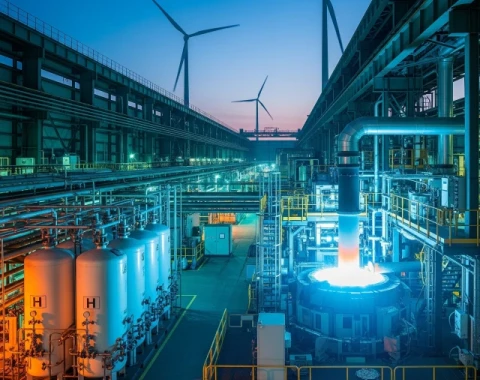
녹색 철강 혁명: 산업 변혁에 대한 전략적 분석
철강 산업의 친환경 철강으로의 전환에 대한 전략적 분석. 전문가 마르친 비아우치크는 DRI 및 EAF 기술, Fit for 55, CBAM, 그리고 탈탄소화 및 ESG 요구사항 시대의 산업 기계 가치 평가 과제에 대해 살펴봅니다. 더 읽어보기
2026년 최신 튜브 및 프로파일 벤딩 기계의 가치 평가
Marcin Białczyk(wesellmachines.com)은 2026년 CNC 벤딩기 가치 평가 기준을 새롭게 정의합니다. 핵심 요점: 완전 전기 기술과 IIoT 데이터는 극도의 정밀도(±0.05°)와 에너지 효율성(50% 절감)을 통해 더 높은 잔존 가치를 창출합니다. 이 가이드는 기술 평가와 2026년 제조 부문 자금 조달 경로(FENG, BGK)를 연계합니다. 더 읽어보기
네일 기계 가격 평가: 당신은 실제로 무엇을 사는 걸까요? 전문가 분석
WeSellMachines에서 일하면서 매일같이 겉보기에는 아주 합리적으로 보이는 질문을 접합니다. "마르친, 이 20년 된 와피오스 자동 세탁기가 왜 4만 유로나 하는 거죠? 아시아 수입업체에서 비슷한 성능의 새 제품을 1만 5천 유로에 살 수 있는데 말이죠." 더 읽어보기

중고 멀티립 톱을 구입하여 제재소를 혁신하는 방법
목공 기계 중고 시장은 규모가 크지만 함정으로 가득 차 있습니다. "판매를 위해 겉만 번지르르하게 칠해놓은" 기계들이 속은 엉망인 경우를 수백 대나 목격한 전문가로서, 저는 여러분을 위해 이 종합 가이드를 준비했습니다. 이 가이드는 단순한 마케팅 문구가 아니라, 기계의 기술적 상태를 스스로 평가할 수 있도록 탄탄한 엔지니어링 지식을 제공합니다. 더 읽어보기
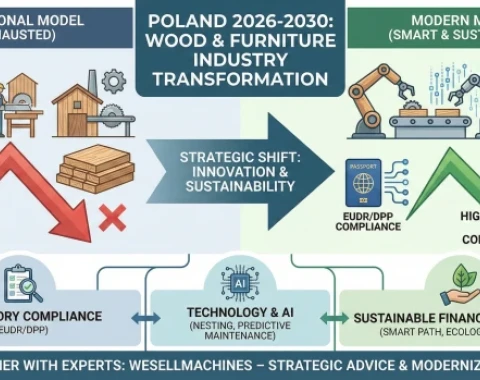
저가 가구 시대의 종말? 2026~2030년 생존 및 성장 전략
수십 년 동안 폴란드 목재 및 가구 산업은 수출 분야에서 압도적인 선두 자리를 지켜왔으며, 2024년에는 무려 163억 유로라는 놀라운 수출액을 기록했습니다. 우리는 가격 경쟁력, 원자재 확보 용이성, 숙련된 노동력을 바탕으로 "유럽의 가구 공장"으로 군림해 왔습니다. 하지만 귀사의 공장을 매일 방문하는 현장 실무자로서 저는 이러한 모델이 한계에 다다르고 있음을 분명히 느끼고 있습니다. 더 읽어보기
요약 보고서: 2025년 전망
금속 가공 산업은 거시 경제 분석에서 "초고효율 시대"로 정의되는 단계에 진입하고 있습니다. 산업 심리 지수가 변동하고 철강 소비 전망치가 미미한 성장(+2.2%)만을 보이는 상황에서 투자 오류의 여지는 사실상 사라졌습니다. wesellmachines.com은 근본적인 패러다임 전환, 즉 '성장 제일주의' 전략에서 '자산 활용 및 현금 흐름 보호' 전략으로의 전환을 주목합니다. 본 보고서에서는 2025-2026년 생존의 열쇠가 '신제품' 구매가 아닌 '효율적인' 장비, 특히 중고 시장에서의 구매에 있음을 분석합니다. 더 읽어보기

중고 목재 CNC 가공기 선택 방법: 단계별 완벽 점검
중고 목재 CNC 가공기를 구매하는 것은 큰 기회이기도 하지만, 동시에 엄청난 위험이기도 합니다. MDF에서 발생하는 미세먼지는 주요 부품을 손상시키고, 스핀들이나 진공 펌프를 수리하는 비용은 상상을 초월합니다. 이 완벽한 가이드(5,000단어 이상)는 전문적인 기술 점검의 모든 것을 담고 있습니다. 스핀들 진단 및 진공 테이블 누출 테스트부터 기계 장치 및 제어 장치 평가까지, 기계를 단계별로 점검하는 방법을 알려드립니다. 전문가가 작성한 체크리스트를 활용하여 값비싼 실수를 방지하고 현명한 투자를 하세요. 더 읽어보기

완벽 가이드: 중고 CNC 프레스 브레이크를 구매하고 후회 없는 투자가 되는 방법
중고 CNC 프레스 브레이크 구매는 전략적이지만 위험 부담이 큰 투자입니다. 이 글은 위험을 최소화하기 위해 전문적인 기술 검사를 단계별로 수행하는 방법을 자세히 설명하는 완벽한 가이드입니다. 20년 경력의 전문가가 프레임과 유압 시스템 평가부터 CNC 제어 장치 진단, 문서 완비 여부 확인까지 점검해야 할 핵심 요소들을 설명합니다. 이 글을 통해 값비싼 실수를 피하고 정보에 입각한 안전한 결정을 내리는 데 필요한 지식을 얻을 수 있습니다. 더 읽어보기
 다음으로 로그인하세요 Facebook
 다음으로 로그인하세요 Google