Spring Maintenance for Your Press Brake: The Key to Longevity and Precision
Quick Answer
Spring maintenance for a press brake includes a detailed inspection of the hydraulic, electrical, and mechanical systems, filter replacement, oil level and quality checks, and tool calibration. This process prevents breakdowns, increases bending precision, and extends the machine's lifespan, minimizing operating costs.
The Importance of Spring Maintenance for Press Brakes
The winter months, often characterized by fluctuating temperatures and increased humidity, can negatively impact press brake components. Condensation buildup in the hydraulic system, filter contamination, and weakened electrical connections are typical problems. Spring maintenance is a strategic investment in the machine's reliability and precision, preparing it for intensive work in the warmer months. Neglecting these tasks leads to costly breakdowns and production downtime. 
The Impact of Winter Conditions on Equipment
Low temperatures increase the viscosity of hydraulic oil, which puts stress on pumps and cylinders. Temperature fluctuations promote condensation of water vapor in the oil reservoir, leading to its degradation and corrosion of internal components. Contaminants, such as dust and metal shavings, can settle in systems, clogging filters and damaging precision components. Regular monitoring and **press brake maintenance** after the winter period is therefore a priority.
Key Steps in Spring Maintenance
Effective press brake maintenance requires a methodical approach. The following steps ensure that every critical aspect of the machine is checked and properly serviced.
1. Hydraulic System Inspection
The hydraulic system is the heart of any press brake. Its proper functioning determines the bending force and precision.
- **Hydraulic oil change**: Check the oil level and quality. If cloudiness, discoloration, or the presence of water is noticed, the oil should be changed. Use oil with a specification that meets the manufacturer's recommendations, such as **ISO 46** or **ISO 68** for most presses.
- **Filter replacement**: Oil filters (return, pressure, suction) should be replaced according to the manufacturer's schedule, usually every 1000-2000 hours of operation or once a year. Clogged filters restrict flow, strain the pump, and can lead to damage.
- **Inspection of hoses and fittings**: Check all hydraulic hoses for cracks, abrasions, and leaks. Tighten any loose connections.
- **Testing valves and cylinders**: Make sure that proportional valves and cylinders operate smoothly and without sticking. Check the tightness of cylinder seals.
2. Electrical and Control System Inspection
A properly functioning electrical system and control system guarantee operator safety and process repeatability.
- **Wiring inspection**: Check all electrical cables and connections for mechanical damage, overheating, and corrosion.
- **Testing sensors and safety switches**: Make sure that all sensors (e.g., beam position, light curtains) and emergency stop switches are working properly.
- **Control panel check**: Verify the operation of all buttons, switches, and touch screens.
- **Software update**: If the manufacturer provides updates, consider installing them to improve functionality and security.
3. Mechanical Component Maintenance
Mechanical components, such as guides, bearings, and tools, require regular lubrication and inspection.
- **Lubrication of guides and bearings**: Use appropriate grease, such as **lithium grease**, for all moving parts. Regular lubrication reduces friction and wear.
- **Tool inspection**: Check the condition of punches and dies. Chipped or worn tools affect the quality of the bend. Replace damaged parts.
- **Fastener check**: Tighten all mounting bolts and nuts, especially those in the tool clamping system.
- **Surface cleaning and maintenance**: Remove any dirt, rust, and deposits from the machine's surface. Protect surfaces against corrosion.

Calibration and Testing
After performing maintenance, it is crucial to recalibrate the machine and perform functional tests.
1. Bending System Calibration
Precise bending requires accurate calibration of the Y1 and Y2 axes and the beam deflection compensation system.
- **Zero point setting**: Calibrate the zero point of the upper beam.
- **Parallelism tests**: Make sure that the upper and lower beams are perfectly parallel during operation.
- **Deflection compensation**: Check and adjust the deflection compensation system to achieve uniform bending along the entire length.
2. Safety Tests
Operator safety is a priority. Perform detailed tests of all safety systems.
- **Light curtains**: Check that the light curtains correctly detect obstacles and stop the beam movement.
- **Emergency stop switches**: Activate all emergency stop switches to make sure that they immediately stop the machine.
- **Protective guards**: Verify that all guards are in place and perform their function.
Maintenance Frequency Comparison
| Component | Frequency (Standard) | Frequency (Intensive Use) | Key Actions |
|---|---|---|---|
| Hydraulic Oil | Every 2000 hrs / 12 months | Every 1000-1500 hrs / 6 months | Check level, quality, replace |
| Oil Filters | Every 1000 hrs / 6 months | Every 500-750 hrs / 3 months | Replace all filters |
| Guide Lubrication | Every 200 hrs / 1 month | Every 80-100 hrs / 2 weeks | Replenish grease, inspect |
| Tools (Punches/Dies) | Daily / Before change | Daily / Before change | Inspect wear, clean |
| Electrical System | Every 12 months | Every 6 months | Check wiring, sensors |
Choosing the Right Spare Parts and Tools
Using original or certified spare parts is crucial for maintaining the machine's quality and safety. Our company, **Used Industrial Machines for Sale**, offers access to a wide range of parts and tools. Check out our selection of press brakes and other metalworking machines, available on My Blog. In our offer you will also find machines such as **Sahinler HKM 115 - Hydraulic Universal Shears 115t** or **DW-75 NCBL - Pipe and profile bender (75x4 mm)**, which also require regular maintenance. 
Operator Training and Documentation
Regular operator training in proper operation and basic preventive maintenance significantly affects the machine's longevity. Access to current technical documentation and operating instructions is essential for proper servicing. Maintaining detailed maintenance logs allows you to track service history and plan future actions.
Conclusion
Effective spring maintenance of a press brake is an investment that pays off through increased efficiency, precision, and reliability, as well as minimizing the risk of unplanned downtime. Regularly following the maintenance schedule reduces operating costs by 15-20% per year.
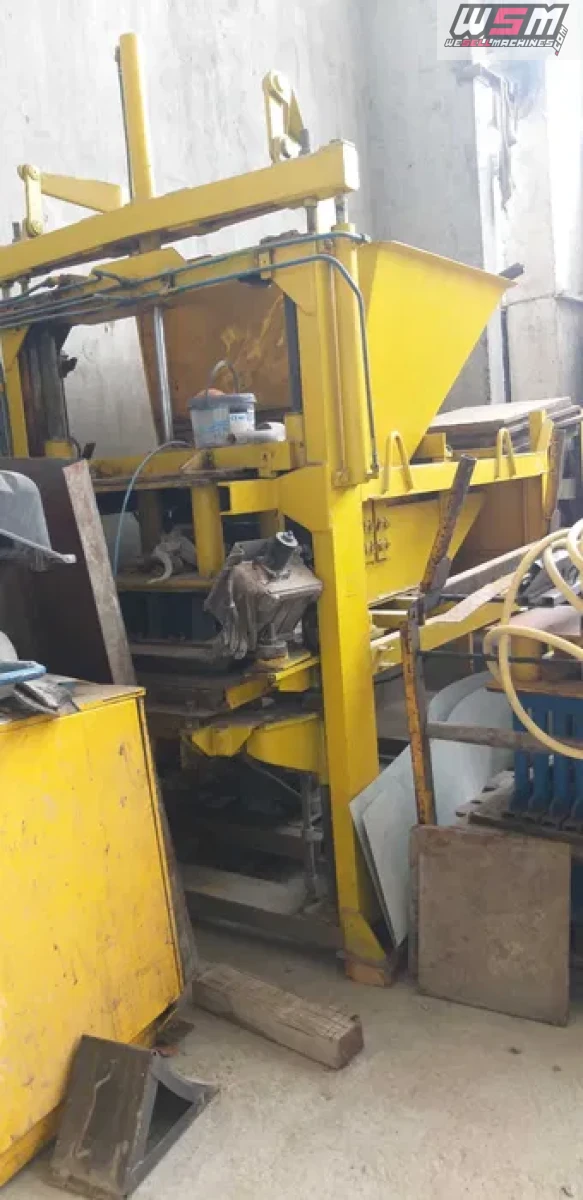
ARES Aggregate for the production of small-sized concrete elements, manufactured by Prefabet Olsztyn
15000.00 EUR
I have an ARES aggregate for the production of small-sized concrete elements, manufactured by Prefabet Olsztyn, for sale. It comes with molds for prod
🛒 View product →Related articles

How to Buy a Used Hydraulic Press: The Ultimate Buyer's Guide
Buying a used hydraulic press? Use our expert checklist to inspect the frame, hydraulics, and controls. Avoid costly mistakes and ensure a smart investment.

Buying a Used BIESSE Edgebander: 7 Critical Inspection Points to Avoid Costly Mistakes
Before buying a used BIESSE edgebander, check these 7 critical points. Ignoring the glue system or unit condition can lead to repairs costing thousands.
Buying Used CNC Woodworking Machines: The Ultimate Practical Guide
Buying a used CNC machine for woodworking is a balance of price and risk. Learn how to inspect spindles, check service history, and avoid costly repair traps.